Changes being reviewed at the UKIPO design consultation
What are the key areas of reform and why do these proposals matter?

As mentioned in our recent article: Changes being reviewed at the UKIPO design consultation – Latest News – Wilson Gunn, the UKIPO is currently conducting a consultation on various changes to the system. The first section deals with efforts to deal with anti-competitive filings. The prime concern is use of invalid registered designs to issue take-down notices on Amazon, eBay etc., which can deal a huge blow to legitimate sellers.
The issue can be illustrated by an enquiry we received a couple of weeks ago concerning the takedown of Christmas crackers based on registered design No. 6409501, an image of which is shown below alongside some of the products affected.
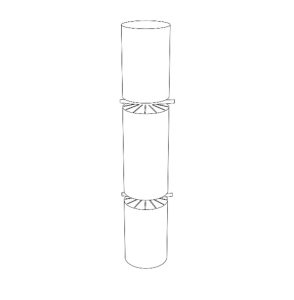

Registered designs protect the appearance of an article, and to be valid they must be novel and have individual character – i.e. be sufficiently different from what is known in the market. Infringement is assessed in roughly the same way – does the allegedly infringing article produce a different impression on the informed user? If not, there is infringement.
At present, the UK Intellectual Property Office does not carry out any searching or examination as to whether a design is novel, or has individual character. This is as a result of harmonisation with EU law many years ago. However, it leaves us out of step with virtually all other major intellectual property offices; examination is required before enforcement in USA, Australia, China, Japan and Korea for example – the EU is the odd one out.
One option being considered by the UKIPO in the consultation is to follow the Australian model, in which designs are registered quickly and cheaply without examination – i.e. taking the best parts of the current UK/EU system – but a design must be certified before enforcement. Certification, whereby the design is searched and examined is therefore an optional step, which only needs to be done before enforcement. But a design cannot be legally enforced, or used for takedowns on e-commerce websites without first being examined and certified.
Taking this case in point, under the Australian system, one could expect that the design would not have been certified – it appears utterly obvious that the design is lacking novelty or individual character, it appears to barely differ from crackers that have been on the market for over 100 years.
However, we do not have such a system. Thus, with one month before Christmas, a well-established and well-known British design and import company is being prevented from conducting legitimate business, facing the prospect of being unable to sell £150K worth of stock at the only time of the year it can be traded.
The company understands that automated complaints were filed against multiple long-standing listings, resulting in immediate delisting across the entire category. The practical effect is that a substantial part of the UK’s Christmas cracker supply on Amazon is currently offline because of the flaw in the current UK design system and Amazon’s notice-and-takedown system. The complaints are objectively baseless and are causing enormous damage to legitimate UK businesses (including VAT-registered importers and manufacturers who have stocked in good faith for the season). Stock is literally sitting in Amazon warehouses unable to ship in the run-up to Christmas.
Aside from a two-stage solution, the consultation is considering other options:
Under either of these options, examiners could conduct limited searching and object in certain circumstances, e.g.
Under either of these options, third parties who became aware of anticompetitive filings would have a short window of e.g. 2-months before or after grant to oppose the design and prevent it from being registered and enforced.
In our opinion, of the options in the consultation only the two stage solution could be expected to deal properly with the real world example case discussed above. The “limited searching / bad faith” option does not propose that all applications should be searched or examined and therefore relies on examiners to happen to notice which of the hundreds of designs filed each day appear to be “anti-competitive” and to take action (also potentially having to justify why they are taking action). Without wholesale examination of every application it seems certain that some designs like this one will slip through the net. The opposition/observation option puts the burden on the applicant to second guess which of their products might be held to ransom in this fashion, conduct regular searches and take costly pre-emptive action.
On the other hand, with a two-stage solution, the owner of the registered design at issue would not have been able to enforce the design without applying to the UKIPO for certification, at which point a complete search and examination would have been conducted to assess whether the design was valid, no doubt resulting in revocation.
N.B. Yet another alternative, not proposed by the Consultation, but which we understand that the government may be receptive to, and which we have mentioned in our response to the consultation would be for a fast-track invalidity and infringement opinion service to be offered by the UKIPO. We envisage this as a rapid assessment by a senior examiner of both validity and infringement of a design, which could be presented to e-commerce sites to persuade them to re-list products swiftly. Of course that would require cooperation with the e-commerce sites, but of course any solution needs their buy-in.
Wilson Gunn’s design team have been advocating for years for the introduction of an Australian-style system – to us, any other approach would be crackers!
If you have any questions on the design consultation or design protection issues, get in touch with your usual Wilson Gunn contact, or Mark Jolly, author of this article.