Why set up trade mark watching?
What is a trade mark watch and why is it important?

We often focus on registering words and logos as trade marks rather than registering the entire image of the label for, say, a jar of jam. There are good reasons for this, not least the fact that a word or logo trade mark can be applied to all kinds of different products and marketing materials in a variety of ways, whereas the product label can often only be used on the product itself and is perhaps more likely to be redesigned or updated, so is less adaptable.
However, in some circumstances, registering the entire label that will be applied to a product may be worth considering (in addition to registering word marks and logos) since it can offer protection – especially against ‘lookalikes’ – when the more common forms of trade mark may not.
Some decisions by courts and trade mark registries point to situations when objections to the use or registration of a later trade mark based on label trade marks have succeeded where a registration of a word or logo would not.
For example, the EU Courts upheld an opposition based on the mark on the left, against the mark on the right, despite clear differences in the words:
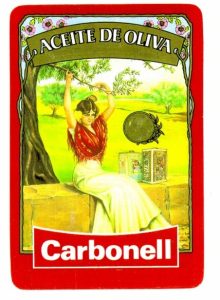
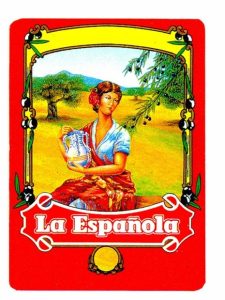
The marks were found to be similar based on both the colour schemes and the drawings of a seated female figure. If the opponent had only registered its word trade mark Carbonell, or its logo (the word Carbonell in a frame with a curved top), or even the female figure alone, they could not have succeeded.
The UK Intellectual Property Office, in part relying on the above decision, recently made a similar judgment in a case concerning brands of curry powder. The mark on the right was found to be similar to the mark on the left, despite the different brand names used:


Once again, the finding of similarity was based on the presence of a combination of the identical/similar elements present in both labels. If the owners of the mark on the left had followed only the approach of registering their brand names and logos – KFL and Kings as shown at the top of the label – they would not have had a basis on which to claim that the later application on the right was for a similar trade mark.
A case where a registration of a label did not work to the advantage of the owner was reported recently, when Thatchers sued Aldi, based on the trade mark on the left, over the latter’s cloudy lemon cider, shown on the right.

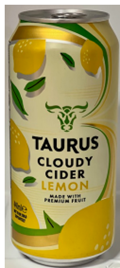
Thatcher’s brought a claim of trade mark infringement in the High Court, but lost, principally owing to the fact that the similarities between the respective labels resided mostly in the use of pictures of lemons and lemon leaves, and use of the colours yellow and green. This is perhaps not so surprising – and we can see the contrast with the two cases previously discussed, where bold colours that have no relationship to the goods concerned were used and were replicated in the offending trade marks.
Registering a depiction of a product label as a trade mark is worth considering for important product lines where copying may be an issue. It can be useful if no single element of a product’s branding is particularly distinctive, but the overall combination is. It probably won’t, however, assist where the similarity to another trader’s branding is limited to one or two identical or similar descriptive or non-distinctive elements, such as images of lemons for lemon-flavoured drinks or a single background colour.
Other avenues to consider for protection of product packaging are copyright and registered design protection. We discussed Marks & Spencer’s court victory last year against Aldi over the design of a gin bottle here.
If you need any advice on registering product labels as trade marks, please get in touch to speak to one of our attorneys.